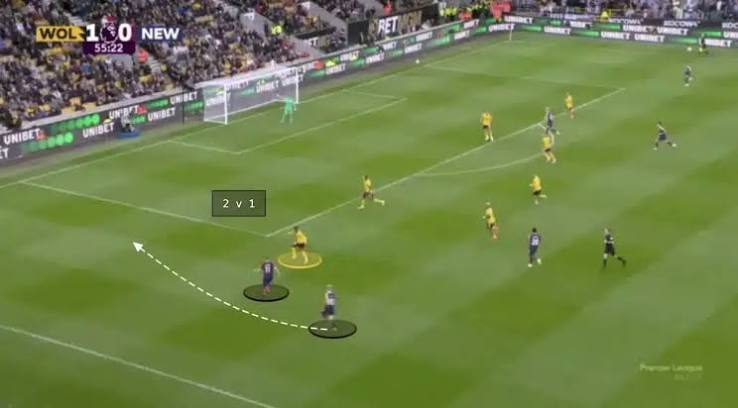

Tactical evolution during the 2012/13 French Ligue 1 season redefined the role of full-backs from purely defensive flank guards into primary wide playmakers. As mid-block and low-block defensive structures became standard across the league, teams struggled to penetrate central areas through traditional passing channels. Pushing full-backs high up the pitch created natural numerical overloads against opposition wing-backs, forcing defensive lines to shift laterally. This structural movement directly increased the frequency of wide deliveries, blocked crosses, and secondary shot attempts, making full-back activity a critical indicator for evaluating shot volume and corner kick markets.
The Tactical Mechanics of Wide Overloads in French Football
Modern wingers in 2012/13 frequently operated as inverted forwards, cutting inside onto their dominant foot to occupy central defenders and clear space on the touchline. When an overlapping full-back exploited this vacant wide channel, opposition full-backs faced an immediate tactical dilemma: stay narrow to protect the penalty box or step wide to challenge the runner. Stepping wide pulled defensive shapes apart, creating passing lanes into the penalty arc for trailing midfielders to take uninhibited shots on goal.
Evaluating Flank Dynamics and Secondary Betting Metrics
The offensive contribution of an aggressive full-back extends beyond basic assist totals, directly influencing secondary match events like corners and deflected shots. Analyzing these wide interactions reveals why specific team profiles generate high corner counts regardless of overall match scoring.
| Full-Back Movement Pattern | Opposing Defensive Response | Primary Chance Generation Mechanism | Corner Kick Yield Impact |
| Overlapping Wide Run | Wide midfielder drops deep | High-volume low crosses to front post | Moderate (Frequent near-post deflections) |
| Underlapping Central Run | Central defender steps out | Direct shot attempts from edge of box | Low (Direct shots or goalkeeper saves) |
| Deep Cross from Wide Zone | Full-back holds deep position | High-trajectory balls to back post | High (Defensive headers behind goal line) |
The tactical breakdown provided above illustrates the relationship between full-back movement patterns and market outcomes in wide areas. Overlapping runs force sliding tackles and forced clearances, which systematically inflate corner counts over ninety minutes. Conversely, underlapping runs compress central spaces, generating immediate shot volume from distance rather than wide dead-ball scenarios. Understanding these spatial dynamics enables analysts to differentiate between teams that generate volume through wide deflections and those that rely on direct central shooting.
How Wide Deliveries Drive Deflections and Corner Line Inflation
Crosses delivered from high pitch positions carry a significantly higher probability of turning into corners than long passes from central zones. When an overlapping full-back reaches the penalty box boundary, defending wing-backs are forced into recovery tackles or desperate sliding blocks. Because defending players prioritize clearing the ball out of danger rather than controlling possession, a high percentage of wide crosses deflect off defending shins or heads, heading directly over the end line for a corner kick.
Observing a match where a team’s primary offensive strategy relies heavily on double-overlapping full-backs offers a clear signal for live market movement. Analysts who monitor real-time statistical shifts through a web-based service like ยูฟ่าเบท can identify mounting corner pressure before in-play algorithms fully adjust, enabling them to capitalize on over-under corner lines while wide possession dominance continues to pin the defending side inside their own third.
Why Defensive Counter-Measures Limit Direct Shot Conversion
While attacking full-backs increase overall team shot totals, they do not automatically guarantee high-quality scoring chances. Defending teams in Ligue 1 frequently countered high-flying full-backs by dropping their wide midfielders into a secondary five-man defensive line. This adaptation narrowed central spaces, forcing full-backs into taking low-probability shots from distance or crossing into congested boxes where central defenders held a clear height advantage.
The Trade-Off Between Flank Vulnerability and Offensive Output
Advancing both full-backs simultaneously leaves massive space behind the defensive line, exposing the team to rapid counter-attacks. In 2012/13, teams that over-committed full-backs forward often conceded high-quality chances on the break, forcing their remaining central defenders into professional fouls or sliding tackles in wide positions.
When Attacking Full-Back Strategies Fail to Produce Corners or Shots
Relying on full-back metrics as a primary analytical model fails when opposition managers deploy specific tactical counters designed to neutralize wide space. Recognizing these structural roadblocks prevents overvaluing wide dominance in matches where offensive output is choked off at the source.
- The opposition uses a 3-5-2 formation with dedicated wing-backs who match the physical output of advancing full-backs.
- Adverse weather conditions create a heavy pitch, slowing down ball speed and rendering wide overlapping runs ineffective.
- The attacking full-back lacks high-level crossing accuracy, resulting in deep overhits that clear the box entirely without defensive contact.
- A central midfield pairing fails to cover wide gaps, forcing full-backs to hold deep positions to prevent counter-attacks.
Analyzing these failure conditions demonstrates why statistical models cannot rely strictly on full-back positioning. If a wing-back system matches the physical footprint of the attacking team, wide overloads are effectively cancelled out, reducing both shot volume and corner frequency. Furthermore, if central midfielders fail to provide defensive cover, full-backs are forced to abandon their attacking runs entirely to preserve structural balance.
Alternative Strategic Focus During Tactical Stalemates
When match conditions suggest that wide channels will be completely congested by compact five-man defensive lines, evaluating sports markets for corner or shot edges becomes highly speculative. Maintaining long-term discipline requires withholding capital when tactical structures negate statistical advantages.
During weekends where athletic matchups present tight, unpromising wide dynamics, shifting attention to non-sports entertainment options allows analysts to reset their focus. Individuals exploring alternative digital gaming environments often transition to a betting destination featuring classic table games and fixed-odds interfaces operating on pure probability models. Taking periodic breaks from complex tactical analysis prevents forced wagers on matches where full-back play produces no measurable market edge.
Summary
Attacking full-backs played a pivotal role in shaping offensive metrics during the 2012/13 Ligue 1 season by creating wide numerical overloads that generated shot attempts and corner kick volume. Overlapping runs consistently forced defensive blocks and near-post clearances, elevating secondary betting totals even when central box entry remained restricted. However, realizing long-term analytical value requires filtering full-back activity against opposition defensive formations, midfield coverage, and crossing accuracy to avoid overestimating offensive output during tactical stalemates.